COMPLIMENTARY SHIPPING OVER $99.


Understanding the True Value Proposition of Natural versus Lab Grown Diamonds
Welcome to the ArtGold Jewelry blog, where we bring over two decades of expertise, passion, and honesty to guide our valued clients in making informed diamond choices. Today, we delve into an engaging topic: the true value proposition of natural diamonds versus lab grown diamonds. Our insight is drawn not only from experience but a deep understanding of the facets that make a diamond not just a gem, but a lasting legacy.
Table of Contents
- Table of Contents
- The Basics: Natural Diamonds and Lab Grown Diamonds
- Natural Diamonds: Earth's Timeless Creations
- Lab Grown Diamonds: Technological Marvels with Caveats
- Guiding Your Diamond Journey with ArtGold Jewelry
- A Resilient Investment
- Conclusion: A Lasting Legacy
- FAQs
The Basics: Natural Diamonds and Lab Grown Diamonds
At its core, a diamond is carbon in its most enchanting form. Both natural diamonds and lab grown diamonds boast this elemental allure, with lab grown diamonds being chemically identical to their natural counterparts. However, crucial differences go beyond composition, affecting value, ethics, and longevity.
Natural Diamonds: Earth's Timeless Creations
Natural diamonds are formed over billions of years under the Earth’s crust, making each one a marvel of nature's craftsmanship. This timeless journey contributes to their rarity and enduring value, ensuring they grace engagement rings and heirloom pieces with unmatched significance. They’re not merely gemological wonders; they are storytellers of Earth’s ancient past.
While it's true that diamond mining has faced ethical challenges, the industry has made marked improvements in traceable sourcing and certification. At ArtGold Jewelry, we are committed to offering ethically sourced natural diamonds, ensuring your cherished pieces are both beautiful and responsible. For further reading, you can explore our article on Expert Advice on Why Natural Diamonds Remain the Timeless Choice.
Lab Grown Diamonds: Technological Marvels with Caveats
Lab grown diamonds, produced in a few weeks using high-energy processes, provide a more accessible pricing option. But, it’s crucial to understand that their initial affordability comes with certain compromises. The energy-intensive production contributes negatively to environmental considerations. Moreover, these diamonds are currently experiencing notable price depreciation due to oversupply, and they lack a strong secondary market.
For readers interested in contemporary trends, lab grown diamonds serve as fashionable alternatives, ideal for trendy jewelry collections rather than legacy-oriented engagement rings or heirlooms destined to adorn future generations. Our article on The Pros and Cons of Lab Grown and Natural Diamonds in Modern Jewelry offers further insights.
Guiding Your Diamond Journey with ArtGold Jewelry
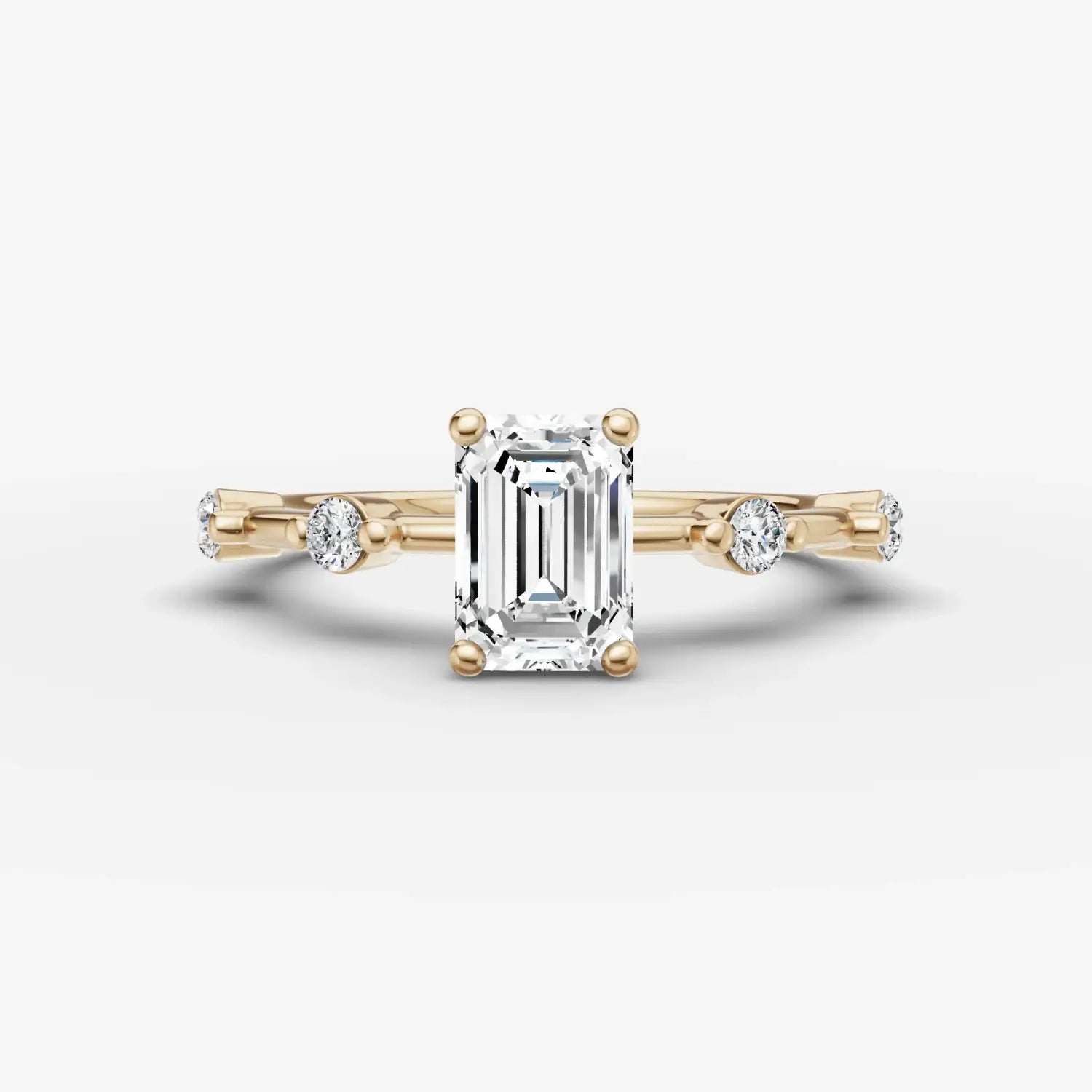
Here at ArtGold Jewelry, we pride ourselves on being a trusted family-owned boutique and atelier since 2005. Our experience has taught us not only the technical aspects of diamonds but the heart and sentiment each piece carries within it.
Our enchanting Engagement Ring Collection features creations such as the Petite Étoile Emerald and the Soleil Pavé — 18K Gold Oval Diamond Engagement Ring — all adorned with ethically sourced, natural diamonds. These rings embody elegance and tradition, making them perfect for your momentous commitments.
A Resilient Investment
Natural diamonds stand out as resilient investments. Their rarity and desirability ensure they retain value over time, enhancing their appeal as fine jewelry and heirlooms. The Sunshine Cushion Ring — a testament to timeless beauty and craft — remains a cherished choice among our collections.
In contrast, lab grown diamonds are best suited for young fashionistas exploring fleeting trends. They offer a chance to embrace style while acknowledging the reality of their lesser financial retention.
Conclusion: A Lasting Legacy
When selecting something as significant as a diamond, a gemstone that is not only reflective of beauty but a marker of personal milestones, making a choice informed by ethical, financial, and emotional factors is crucial.
For those seeking a piece meant to capture a lifetime and more, natural diamonds remain the quintessential choice — exceptionally crafted by nature and resonant with historical richness. Visit ArtGold Jewelry to discover our commitment to quality and authenticity, where each diamond narrates its unique tale.
Whether consulting our diamond buying guide or exploring Avoiding Common Pitfalls in Diamond Buying With a Focus on Natural Diamonds, we guide you through every step of your diamond journey.
With warm regards and steadfast dedication to your lasting happiness,ArtGold Jewelry
FAQs
What is the main difference between natural and lab-grown diamonds?
Natural diamonds are formed over billions of years deep within the Earth’s mantle through natural geological processes, while lab-grown diamonds are created in controlled environments using advanced technology that replicates these natural conditions, typically within a few weeks.
Are lab-grown diamonds considered real diamonds?
Yes, lab-grown diamonds are real diamonds. They have the same chemical composition, physical properties, and optical characteristics as natural diamonds. The main distinction lies in their origin.
How do the values of natural and lab-grown diamonds compare?
Generally, lab-grown diamonds are less expensive than natural diamonds, often costing 20-40% less. This price difference can be attributed to the shorter production time and the ability to create lab-grown diamonds on a larger scale.
Do lab-grown diamonds hold their value like natural diamonds?
Lab-grown diamonds tend to depreciate faster than natural diamonds in the market, as their production can be scaled up, affecting supply and demand dynamics. Natural diamonds typically have more historical value and resale potential.
Are there any ethical concerns related to lab-grown diamonds?
Lab-grown diamonds are often considered more ethical than natural diamonds since they do not involve mining that can lead to environmental degradation or conflict associated with "blood diamonds." However, the energy sources used in production can still raise some ethical questions.
Can you tell the difference between natural and lab-grown diamonds?
To the untrained eye, it’s nearly impossible to distinguish between natural and lab-grown diamonds. Special equipment used by gemologists or gem laboratories is required to identify the subtle differences in their formation.
What are the environmental impacts of natural vs. lab-grown diamond production?
Natural diamond mining can lead to significant environmental disruption, including habitat destruction and soil erosion. In contrast, lab-grown diamonds typically have a smaller carbon footprint, but the energy used in their production can be a concern depending on the energy sources.
Are lab-grown diamonds a good choice for engagement rings?
Many couples now consider lab-grown diamonds for engagement rings due to their affordability, ethical considerations, and the same brilliant qualities as natural diamonds. Ultimately, it comes down to personal preference and values.
How do I choose between a natural and lab-grown diamond?
Choosing between a natural and lab-grown diamond depends on factors such as your budget, ethical considerations, and personal preferences regarding rarity and investment. Educating yourself about both types can help you make an informed decision that feels right for you.


